

In the Name of God, the Most Gracious, the Most Merciful.
Introduction: The Knowledge of Amir al-Mu’minin (A)
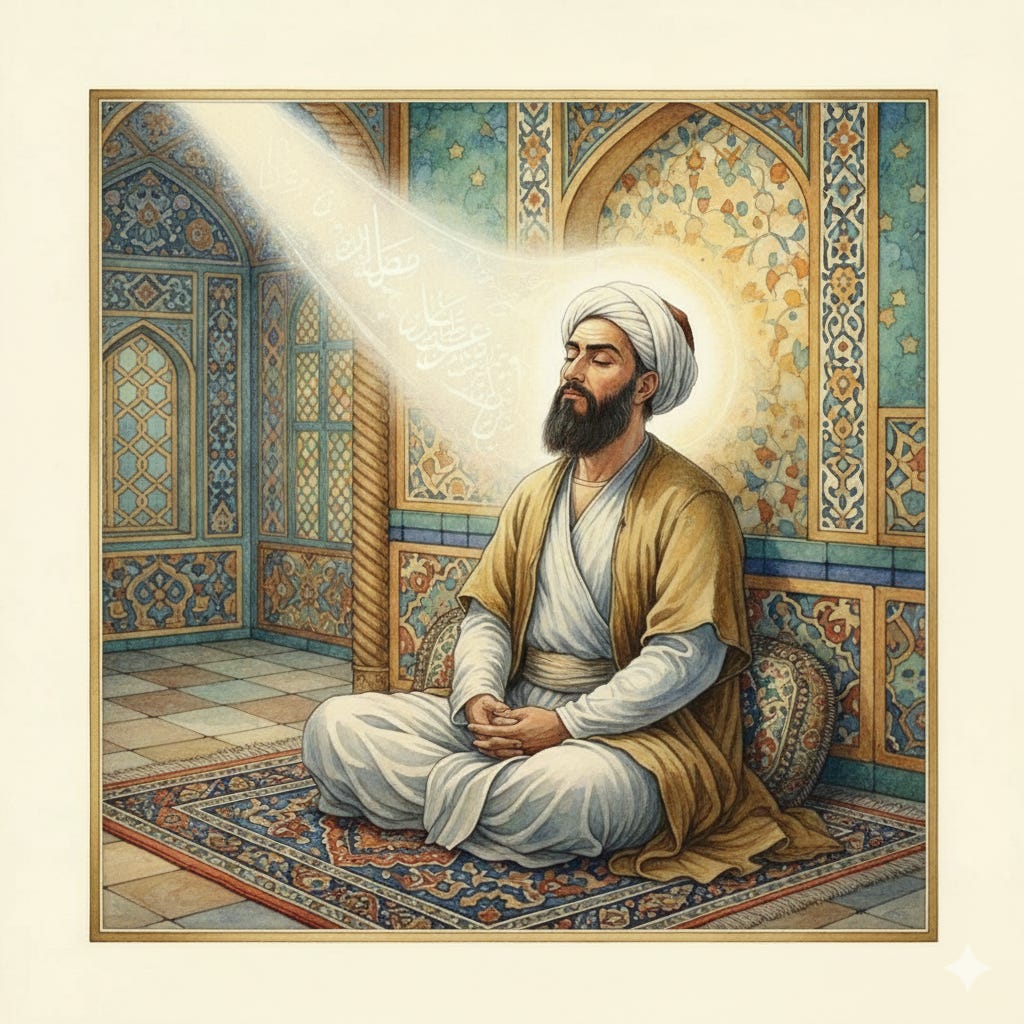
One of the luminous words of Amir al-Mu’minin (peace be upon him) appears in the section of Short Sayings — specifically, Saying 184 of Nahj al-Balaghah. The Imam (A) says:
“Since the moment the Truth was shown to me, I have never doubted it. I knew the Truth well because it was revealed to me. I became a knower through the manifestation of Truth itself, not through study or debate.”
This statement is profoundly insightful. The Imam emphasizes that true knowledge does not arise merely from hearing or studying — it comes through seeing and witnessing. As he says, “The matter is that of sight, not of hearing.” Thus, his knowledge is the result of direct inner vision, not discursive learning.
The Two Paths to Knowledge
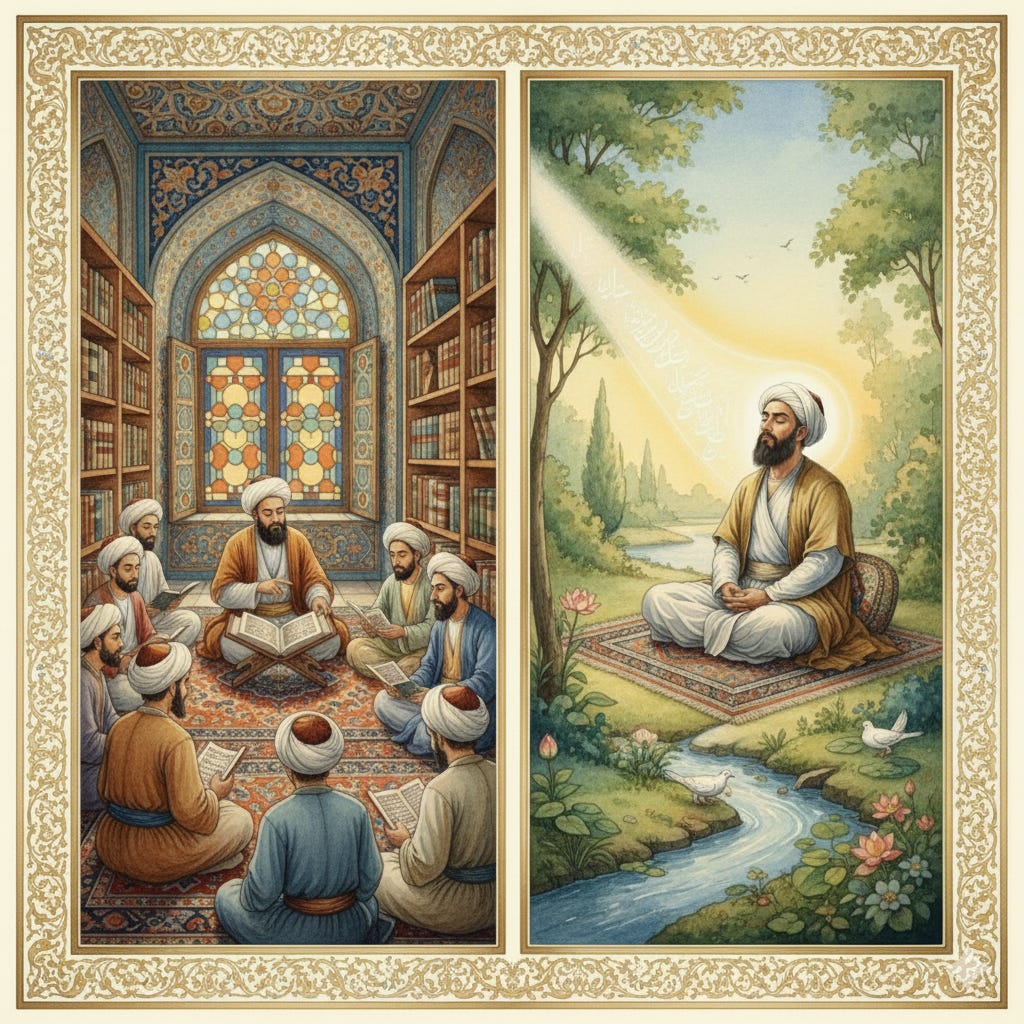
This statement reveals that human beings attain knowledge through two channels:
External (Apparent) Channels – Sight, hearing, speech, and the sensory faculties by which we learn in seminaries, universities, or through teachers. God has provided these so that humankind may become scholars and scientists through study and experience.
Internal (Esoteric) Channels – The path of purification (tazkiyah), inner refinement, and spiritual unveiling. Through this purification, one enters the “school of the heart” — the school of tawḥīd and wilāyah (divine guardianship).
These two paths are not mutually exclusive. They can, and indeed should, complement each other. A person may reach the Truth through both the outer world of study and the inner world of spiritual purification.
The Reality of Inner Vision and Human Faculties
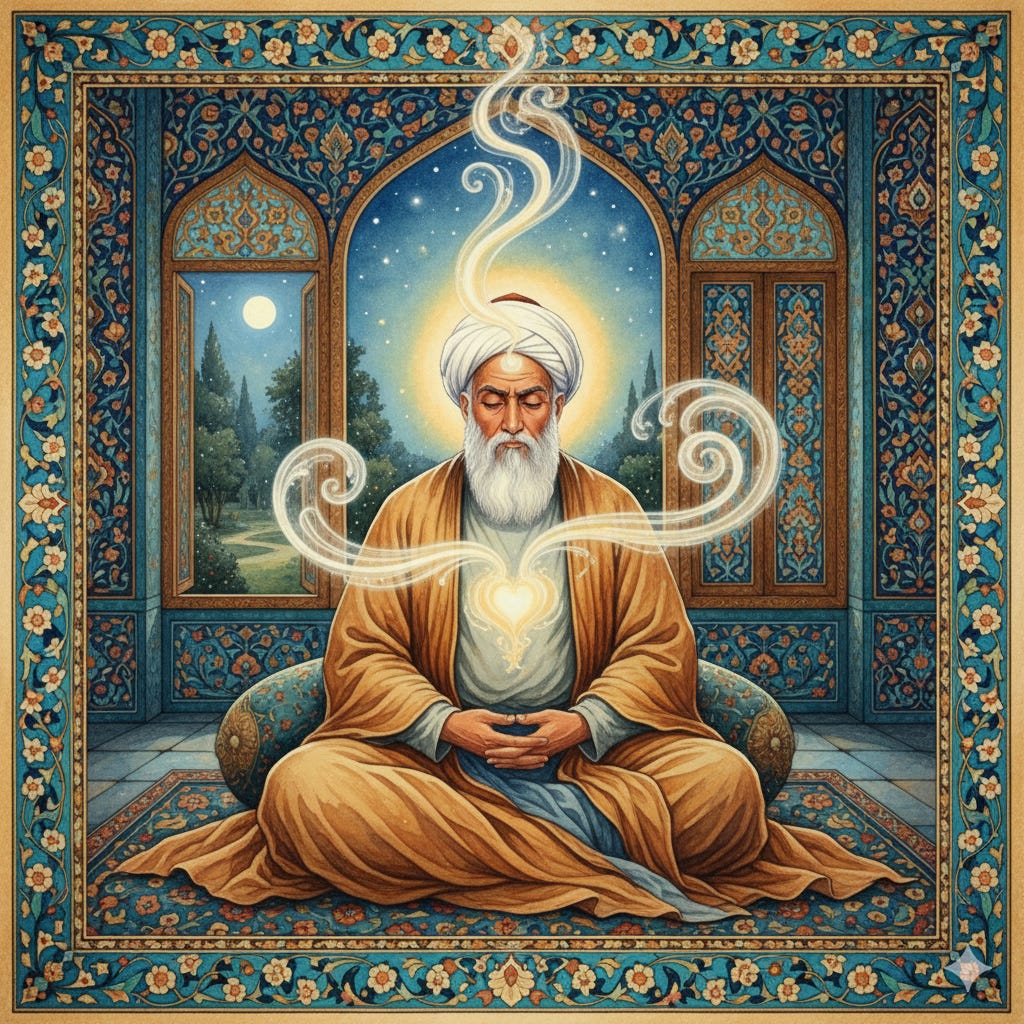
The Imam’s words — “When the Truth was shown to me…” — indicate that this vision occurred through the inner eye, not the physical one. God has granted every human being this inner eye and ear, just as everyone possesses outward senses.
Each of us has, within, a complete spiritual sensory system: inner vision, hearing, and feeling. The world of dreams itself teaches us this — we see, hear, and interact while our physical body rests. Hence, beyond our material senses, our souls possess independent faculties of perception.
The People of Both Paths
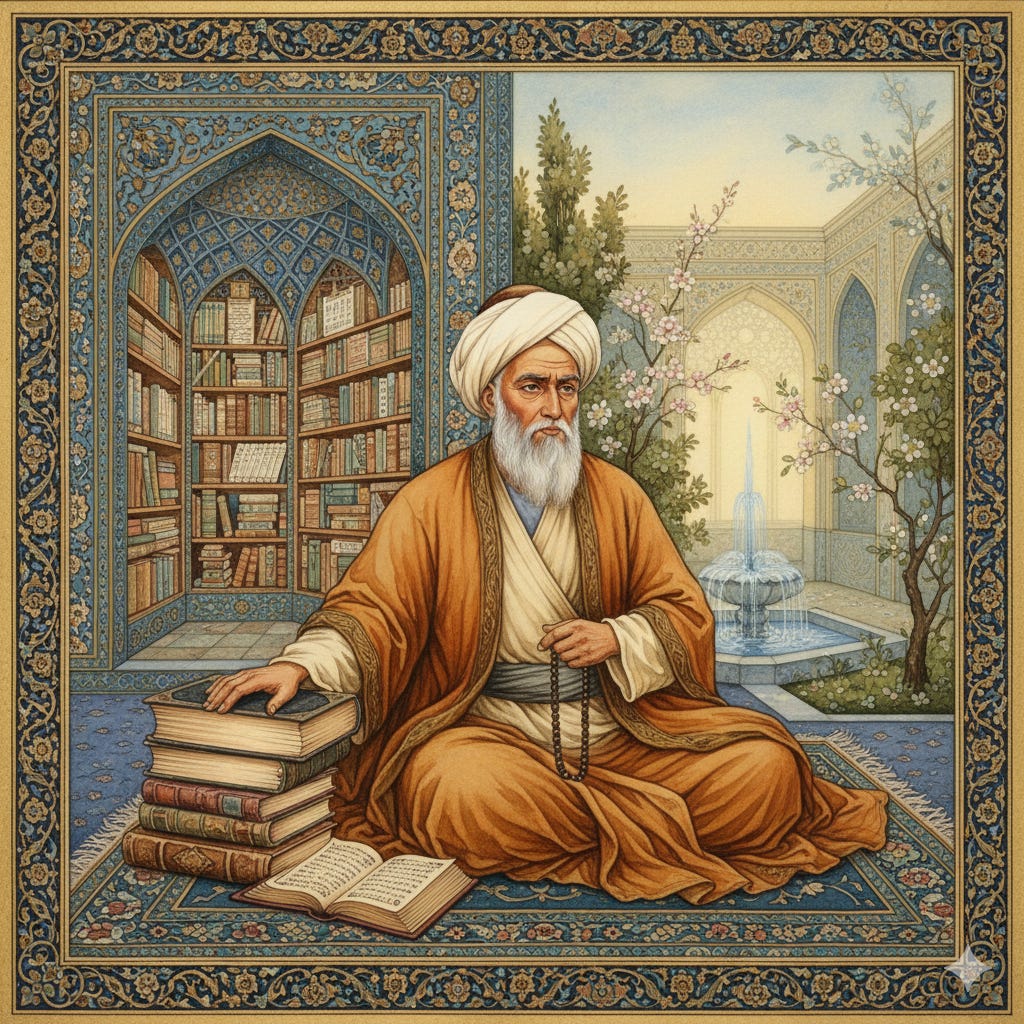
Some individuals attain both types of knowledge. They are grounded in the seminary or university and, simultaneously, are people of dawn (tahajjud), supplication, and invocation. Others may succeed in one path but fall short in the other. However, the Imams (peace be upon them) were masters of both — particularly of the inner way, having learned directly in the presence of Prophethood and Wilāyah.
When the Imam says, “The Truth was shown to me,” it becomes clear that his learning was inward — he did not attend an outward school, but the School of the Prophet (S) himself.
The Quranic Foundation for Inner Vision
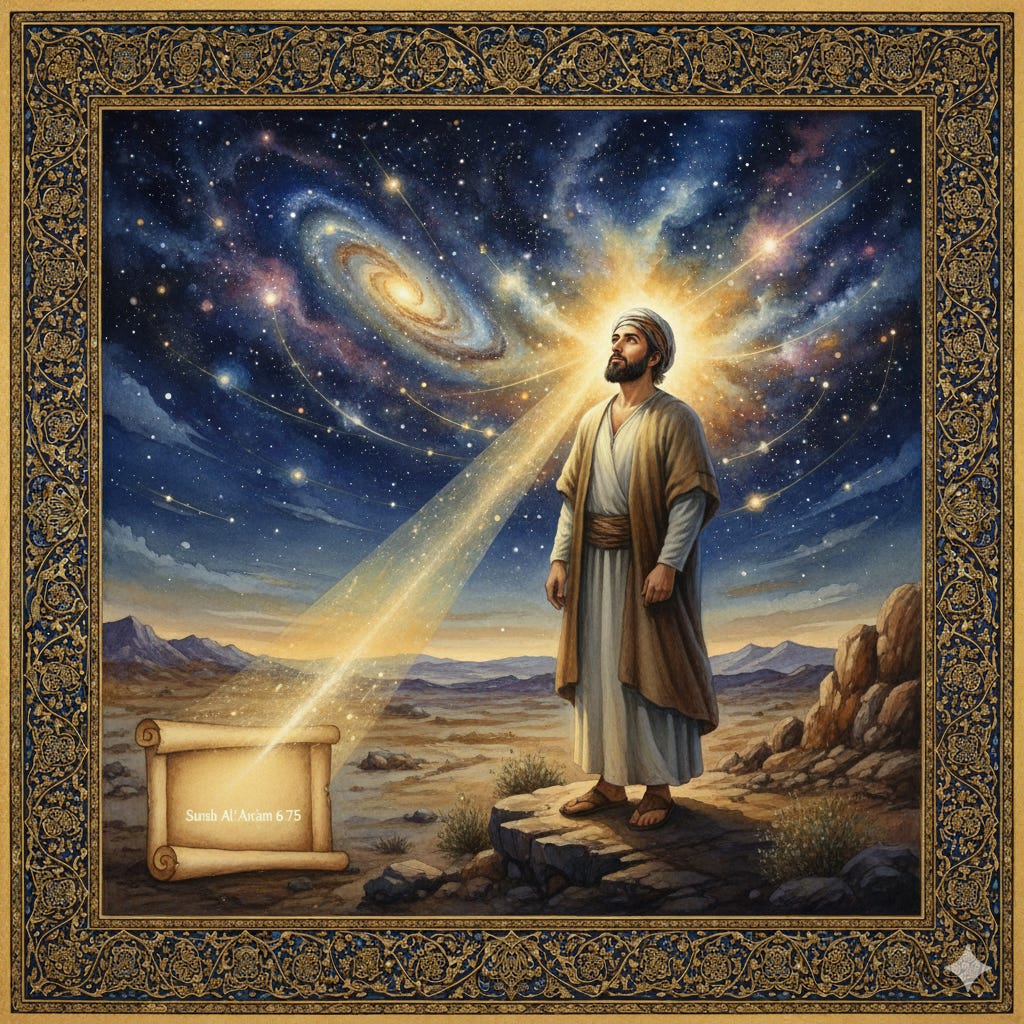
The Quran frequently affirms this concept of inner vision:
“And thus We showed Abraham the kingdom (malakūt) of the heavens and the earth.”
(Surah Al-An‘ām, Chapter 6, The Cattle, Verse 75)
This verse expresses not a past event but a continuous state — implying that divine unveiling is ongoing. The Quran later calls the believers “the people of your father Abraham” (Surah Al-Ḥajj, Chapter 22, The Pilgrimage, Verse 78), emphasizing that we, too, are heirs to that inner vision.
Therefore, as children of Abraham, we must not submit to worldly powers but instead awaken the divine insight inherited from him.
The Respect and Politeness of the Divine Word
The Quran honors humanity immensely. God speaks to us with gentleness and respect:
“O you who believe…”
Our Lord, who has no equal, addresses us graciously and respectfully, teaching us the etiquette of divine discourse. This sacred book is a treasury of courtesy from beginning to end — hence we kiss it and hold it above our heads because it dignifies human beings so profoundly.
Seeing and Knowing: The Difference Between Looking and Vision
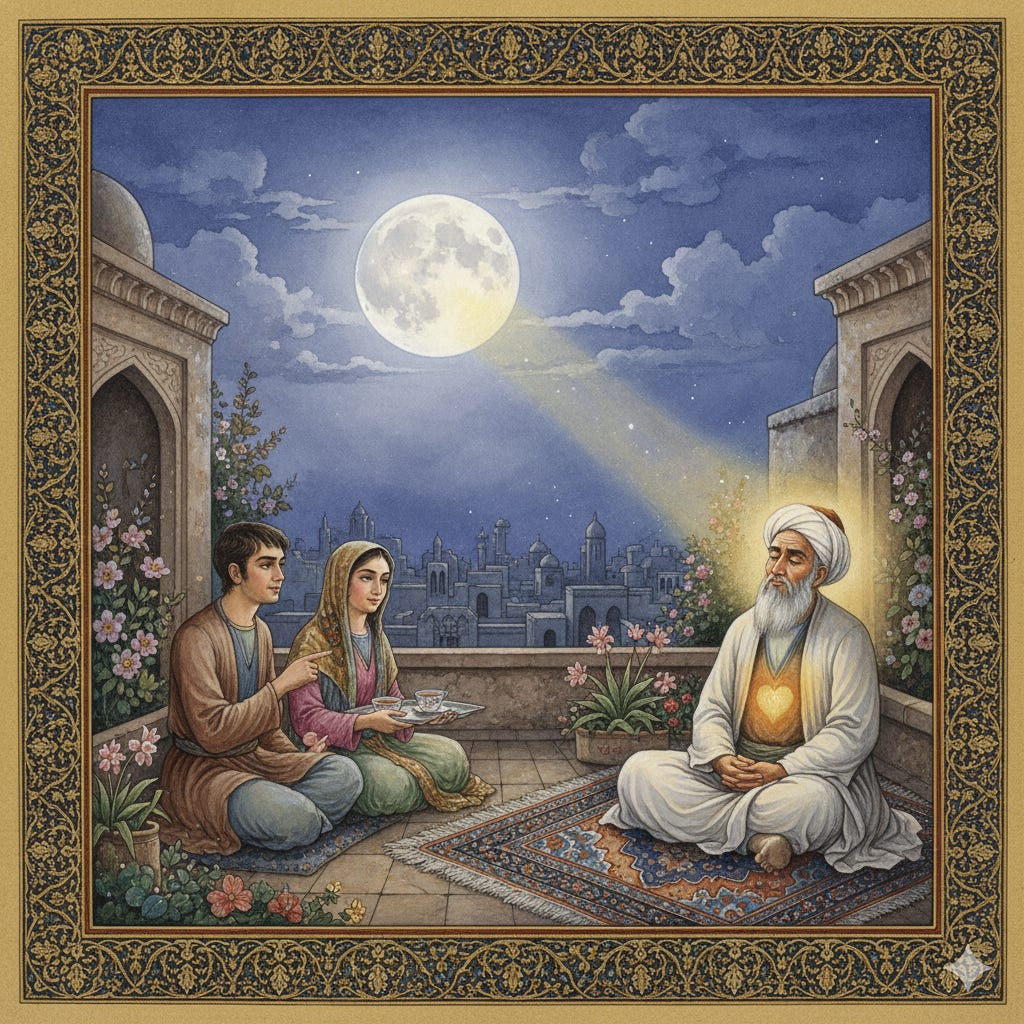
The Quran invites us not merely to look but to see:
“Do they not look at the kingdom of the heavens and the earth?”
(Surah Al-A‘rāf, Chapter 7, The Elevated Places, Verse 185)
There is a major distinction between looking (nazar) and seeing (ru’yah). One may look and not truly perceive — just as one may gaze at the moon yet fail to see it clearly. Hence, real insight requires a vision that penetrates beyond appearances.
The late Allāmah (may God be pleased with him) used to explain that mere observation is not vision; seeing indicates direct inward awareness.
Love, Worship, and the Call to Strive
As Ḥāfiẓ says: “Do not be unaware, for love in me increases for the people of the world…”
And as al-Kulaynī narrates in al-Kāfī (vol. 2, p. 83), Imam al-Ṣādiq (A) said: “The best of people is the one who loves prayer.”
True worship is not a burden or duty; it flows from love. Just as the poet describes the auction scene — “Who bids more?” — the people of love compete in nearness to God, each striving to “buy” more of divine intimacy.
Question: Where are we on this path?
Answer: We are only at the beginning.
Yet God has opened the way for every soul and encourages all to strive. He says: “And they do not look into the kingdom of the heavens and the earth…” (Surah Al-A’raf, Chapter 7, The Elevated Places, Verse 185) This divine command — “Why don’t you go?” — implies the path is open to all who seek it sincerely.
The Dual Apparatus and Divine Rhythm
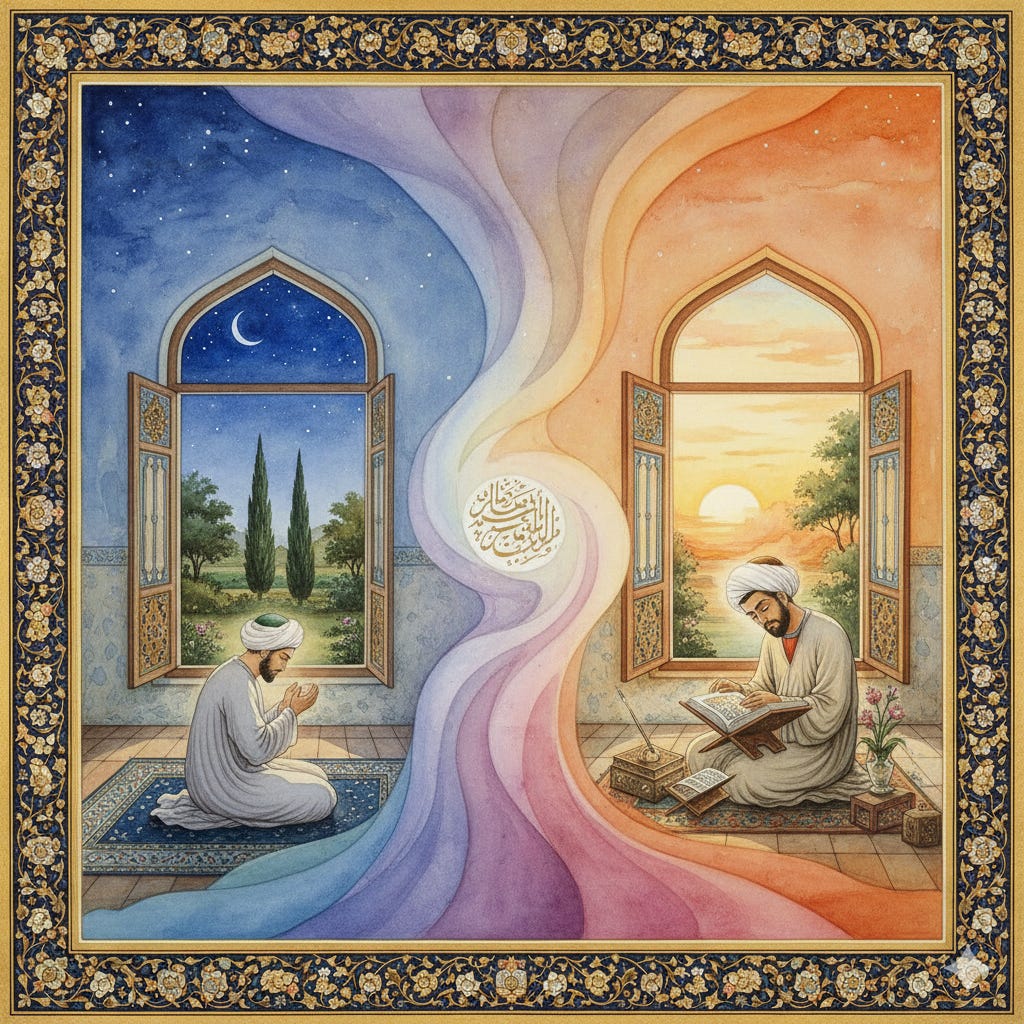
Human beings have been granted two complete systems:
The outer apparatus — eyes, ears, and intellect, by which one studies, experiments, and learns through experience.
The inner apparatus — spiritual senses, which become awakened through purity and abstaining from sin.
Those who guard their eyes, tongues, and actions from the unlawful may begin to see truthful dreams — moments of divine insight. These inner experiences are signs of an active inner eye and ear.
The Quran further explains that the alternation of night and day serves the seekers:
“And it is He who made the night and the day successors for those who wish to remember or be thankful.”
(Surah Al-Furqān, Chapter 25, The Criterion, Verse 62)
If one fails to succeed in remembrance during the day, let him try at night — and vice versa. Both moments are opportunities for turning to God, each succeeding the other in mercy and witness.
The Realm of Vision and Its Limits
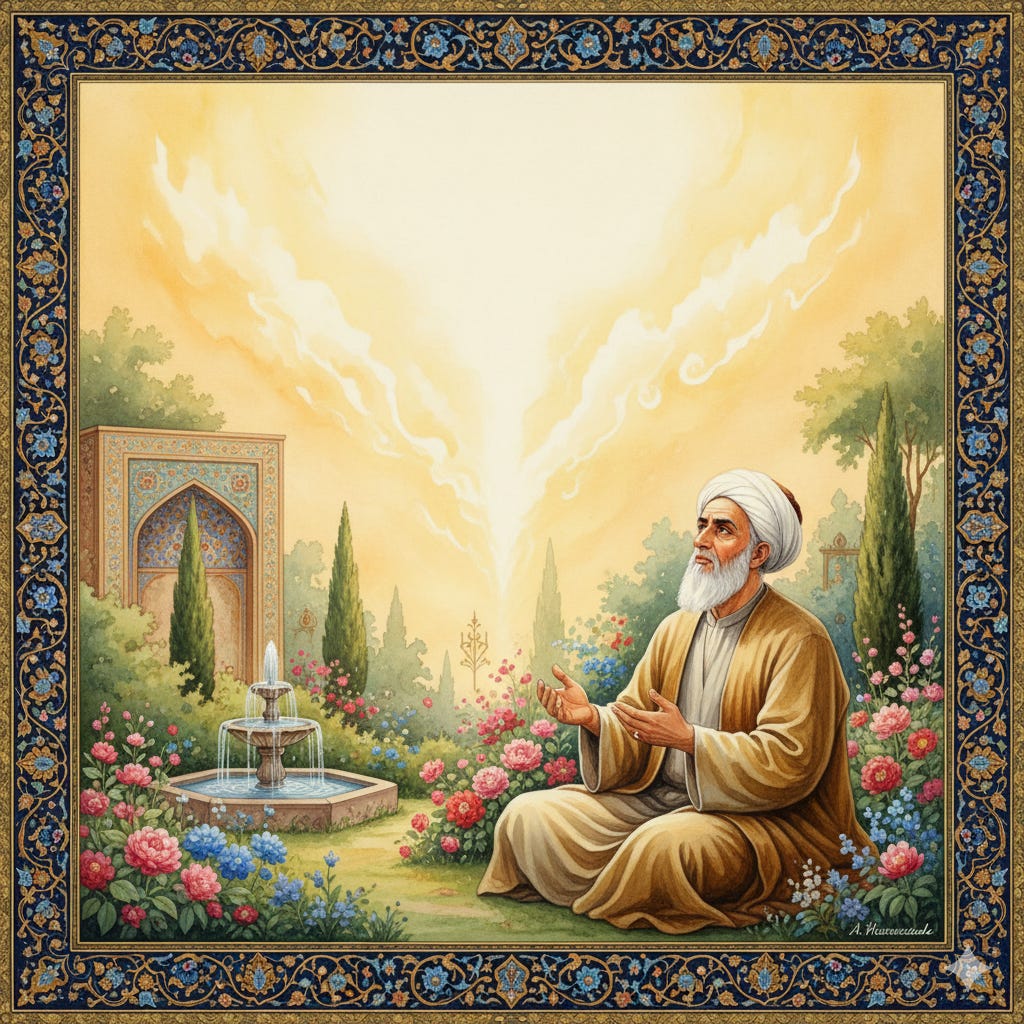
When the Imam says, “Since I saw the Truth, I have never doubted,” he distinguishes the realm of vision (malakūt) from the realm of the unseen Divine Essence (dhāt). The Divine Essence cannot be seen by any Prophet or saint, for It is beyond limitation and form.
Nahj al-Balaghah delineates this boundary clearly: we may witness the signs, grace, and acts of God — Paradise, Hell, angels, and the kingdom — but never His infinite Essence.
The Vision of the Saints
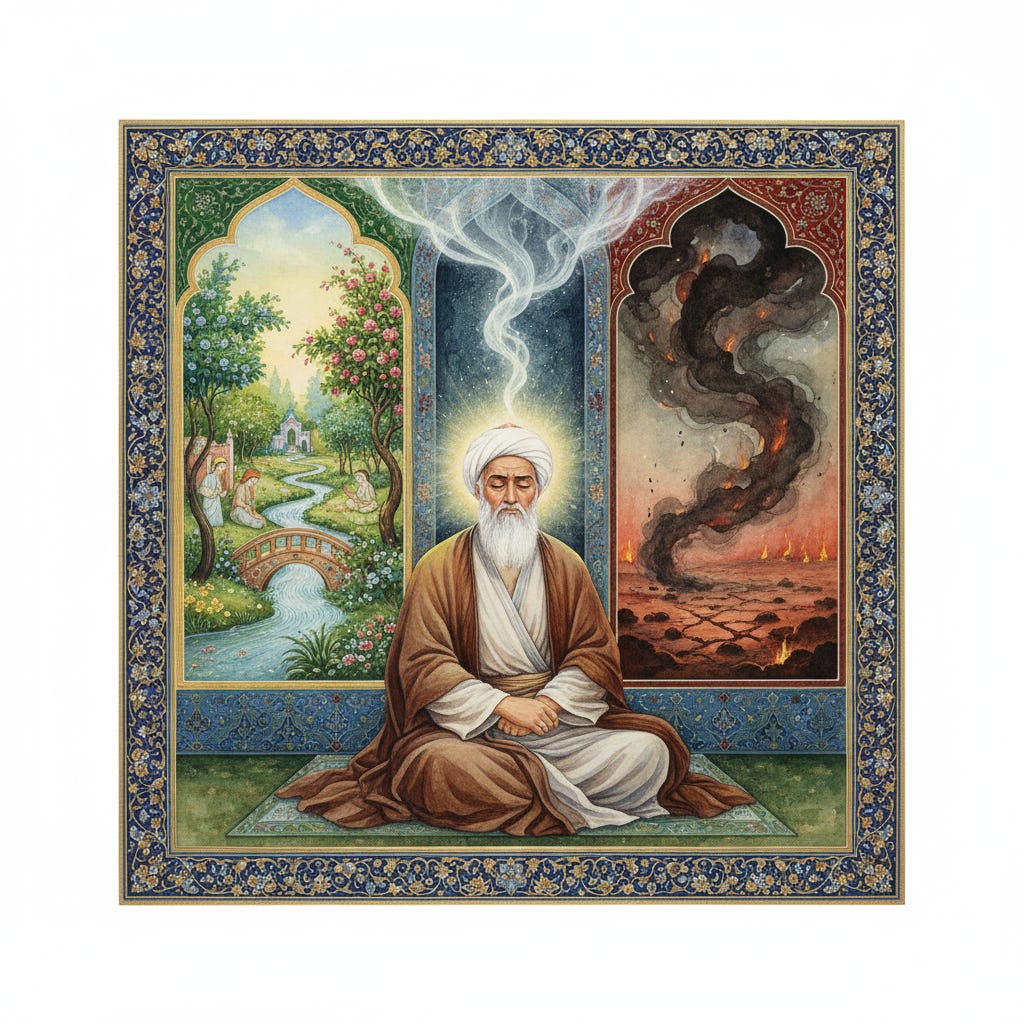
Some saints and purified souls, described in Nahj al-Balaghah Sermons 193 and 222, attain a level of vision wherein they perceive Paradise and Hell as if they see them. Their spiritual sight makes the unseen world as vivid to them as the visible one.
In Sermon 193, the Imam describes the pious as those who: “Are so aware of Paradise that it is as though they see it. When encountering sin, they tremble as if seeing the fire.”
This reflects a level of inner certainty surpassing mere faith.
The Inaccessibility of the Divine Essence

In concluding discussions (Sermons 109, 147, and others), Imam Ali (A) states firmly that the Divine Essence cannot be perceived:
“He who spoke to Moses showed him His great signs without speech or instruments.”
God manifests through His acts and signs, but remains beyond comprehension. His reality has no parts or measure — thus, while the sea can be tasted in a drop, the Divine Essence, being infinite and indivisible, cannot be portioned or measured.
Knowledge of the Divine Through His Signs
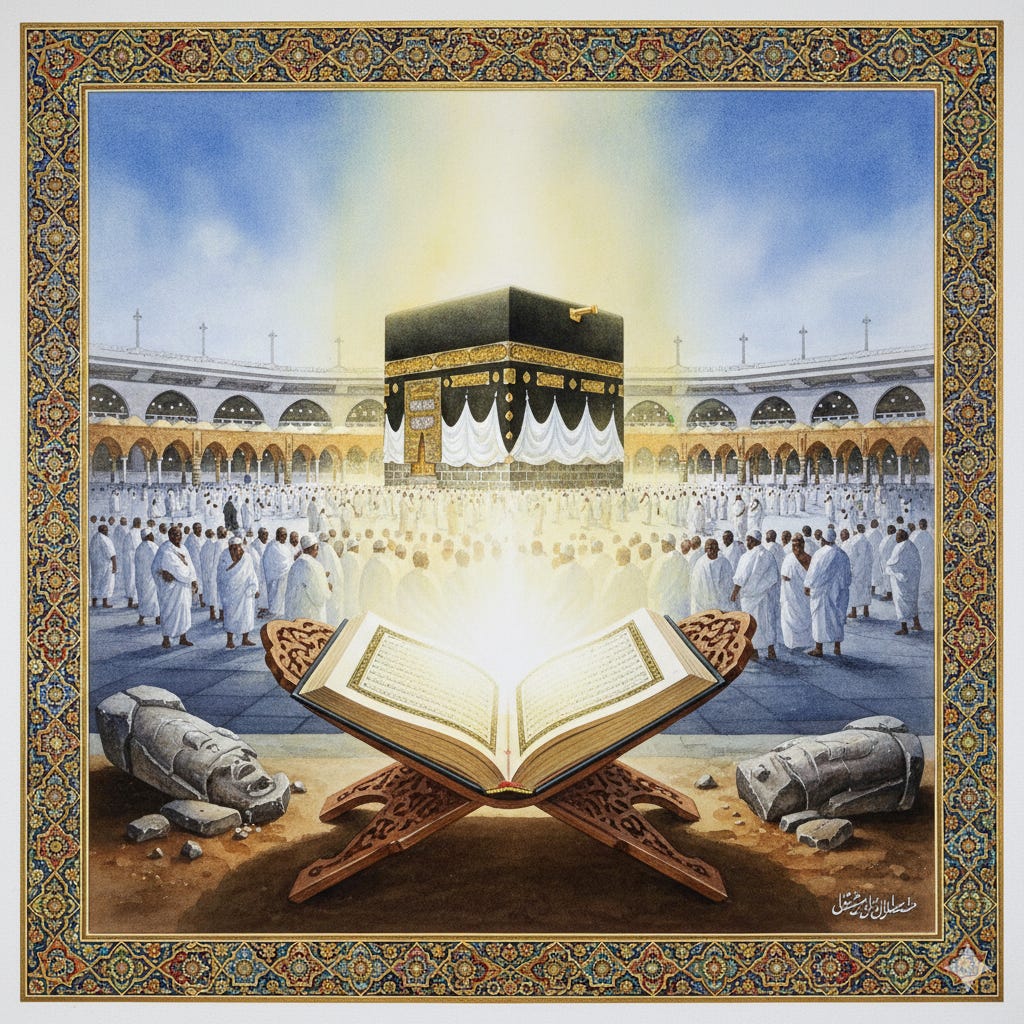
Through the Quran, God manifests Himself — but only through His signs, not through direct self-revelation. The Prophet (S) guided humanity from idolatry to divine worship, from ignorance to recognition, so that “the worshippers may know their Lord after being ignorant of Him.”
Hence, all our vision and understanding relate to His creation, His grace, and His acts — never to His Essence, which remains unapproachable.
The Ultimate Lesson: Two Complementary Journeys
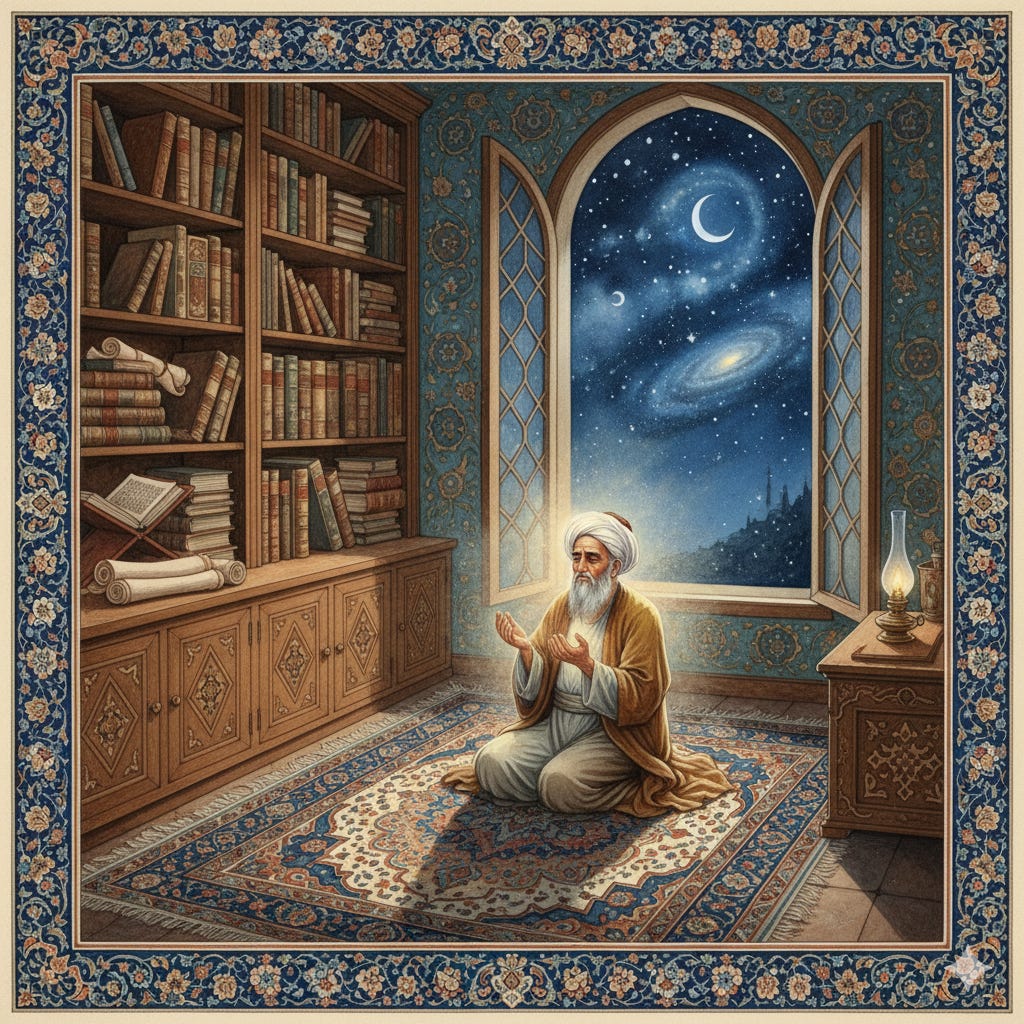
In conclusion, every human being possesses:
The outer faculties, through which one learns and acquires formal knowledge.
The inner faculties, through which one is purified, prays, and witnesses divine realities.
The Imam al-Askari (A) stated that no one can reach the ultimate Truth except through the mount of night prayer — “the journey cannot be realised except by riding at night.”
Hence, the two paths — study and purification — lead together toward divine knowledge.
Final Supplication
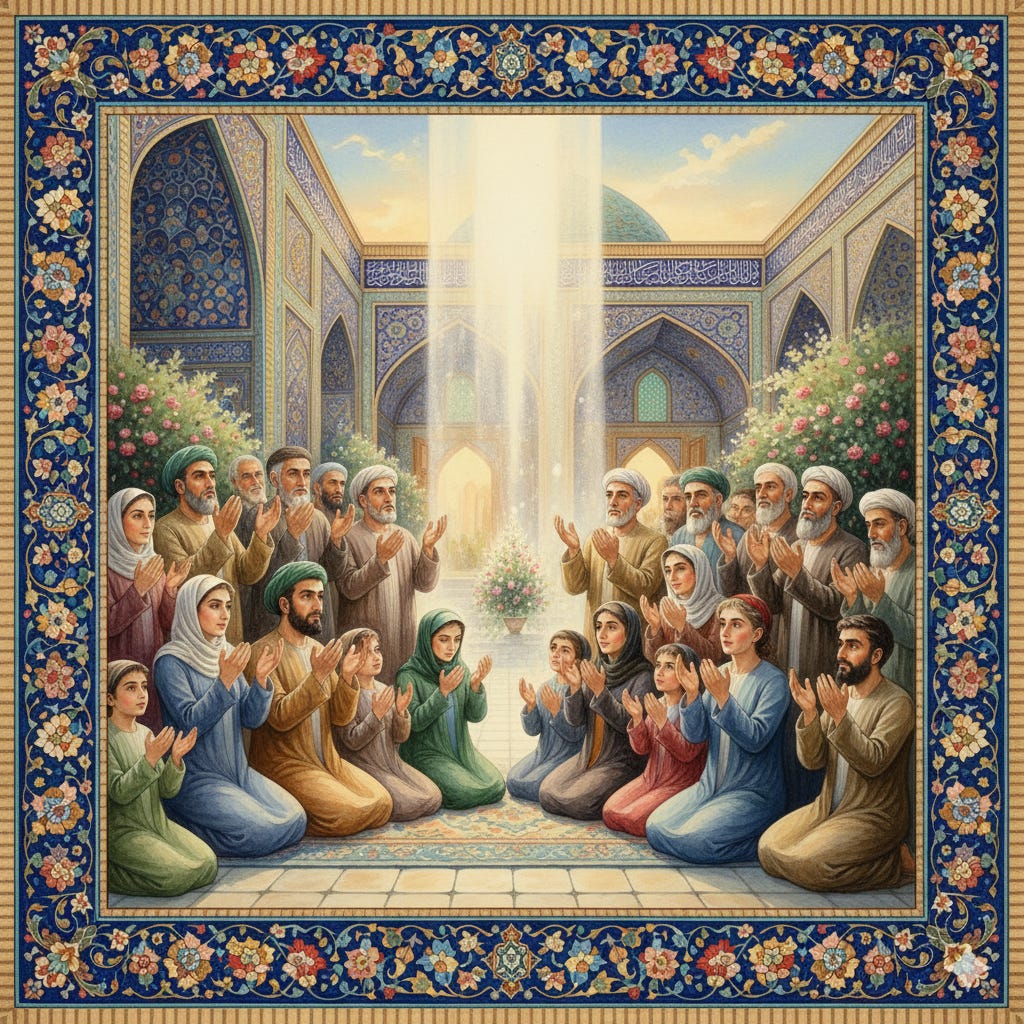
We ask the Most Holy Essence of God, through the blessings of the Quran and the purity of the Ahl al-Bayt (peace be upon them), to:
Gather the righteous, the martyrs, and the leaders of this system alongside the Prophets and Saints in the Hereafter.
Protect this divine system from all harm until the reappearance of its true master.
“And all praise is due to Allah, Lord of the Worlds.”
References
Surah al-An‘ām 6:75
Surah al-Ḥajj 22:78
Surah al-A‘rāf 7:185
Dīvān of Ḥāfiẓ, Ghazal 196
al-Kāfī, vol. 2, p. 83
Surah al-Furqān 25:62
Surah al-Baqarah 2:164
al-Kāfī, vol. 2, p. 54
Waram Group, vol. 1, p. 150
Surah Āl ʿImrān 3:28