

The Fundamental Question: Why Do We Raise Families?
Video:
Audio:
Original Audio from Sheikh Ali Reza Panahian’s Website
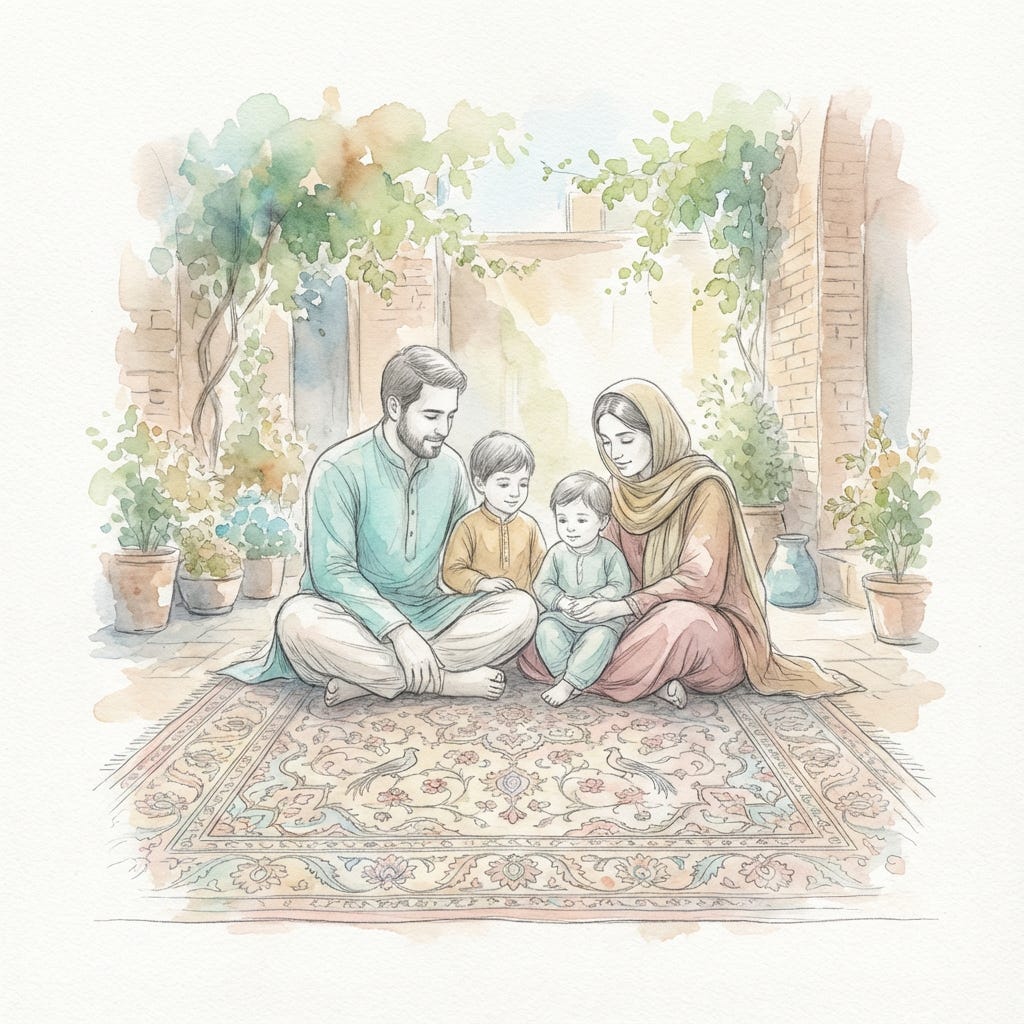
In our families, when we raise our children, what specific “good” are we aiming for? We encourage them, plan for them, and provide resources, but what is the underlying motivation? Is the goal simply to raise “good children” who do not commit bad deeds or bring shame upon us? Is it merely so they can be successful, independent, have a respectable job, and be secure? In a community of faith, we must pause and reflect on the ultimate purpose of forming a life and enduring the hardships of parenting. Is the main goal simply for the child to become religious or perform prayers? Sometimes, even that goal fails because the child does not listen. We must ask: Is our priority simply “being religious,” or is there a higher, specific priority within religion that we must value above all else?
The Danger of Vague Goals

If a goal is well-defined, the path to achieving it becomes easy, and complexities are resolved. However, we often suffer from ambiguity; our goals are vague and lack a specific final destination to drive our efforts. Many people say the goal is simply “to be good” or “to reach God,” but we must not settle for generalities among all possible virtues. Just as governments create five-year plans to organize affairs, families must have a specific target to invest in, or things will not be corrected. Living or marrying without a specific aim makes life difficult and choices hard. When there is no good purpose for the family, “heaven and earth” may not aid us in achieving a good family life. A good goal acts like a fire: it draws you in, creates energy and power, and motivates movement. If the goal is beautiful, the struggle to reach it becomes a joy, much like how a difficult task becomes pleasant when done for a loved one during a courtship. A clearly defined goal acts like a navigation system; without setting the destination, one cannot find the way.
The Ultimate Goal: A Center for Guardianship (Wilayat)

What is the best objective for forming a family and raising children? The ultimate goal is for the home and family to be a place for training “Wilayat-oriented” individuals (those loyal to the Guardian/Imam). The home must be a place for strengthening this Guardianship. When you achieve this one hundred percent, the other ninety percent of virtues follow automatically. This goal clarifies our actions. For example, why must a father not bring forbidden (Haram) money into the house? It is not just because “it is bad.” It is because forbidden food prevents a child from becoming Wilayat-oriented. As Imam Hussain stated to his enemies, their bellies were filled with the forbidden, rendering his words ineffective upon them. When the goal is specific—”I do not want forbidden income because I want my child to be capable of weeping for Hussain”—it creates a burning motivation.
Redefining Marriage and Success

We must move beyond empty words like “successful marriage.” A woman should marry to practice and strengthen her Wilayat; a man should do the same. The true purpose of the husband and wife is to help each other become more loyal to the Guardian. A “good family” is not merely one where there is no fighting, no divorce, or where everyone is wealthy and educated. A truly good family is one where the angels can testify that since marriage, the husband and wife have become more Wilayat-oriented and more in love with Imam Hussain. That is the main criterion; good character and ethics will follow naturally from this root. We must pray that our homes become training grounds—barracks—for the soldiers of the Imam of the Time (Mahdi). The greatest joy for parents is seeing their child not just playing, but dying of love and humility for the Imam (e.g., Imam Ridha).
The Atmosphere of the Home: A House of Mourning
A family is formed to turn the house into a “tent of Aba Abdillah Al-Hussain.” The house should reflect the “scent” of Wilayat. Even the walls of a house can show this. Imam Baqir said the best land is where our Shia (followers) reside. Therefore, we should hold mourning sessions (Rouzeh) in our homes, even if they are simple family gatherings with just a few people reading a pilgrimage prayer (Ziyarat Ashura) and sharing tea. When the sound of “Ya Hussain” is raised in the home, it impacts the children, even if they are playing or sleeping. We should ask the Imam to look upon our homes, to make them consistent with his dignity, so that our loneliness is removed by his presence.
The Eternal Family Bond
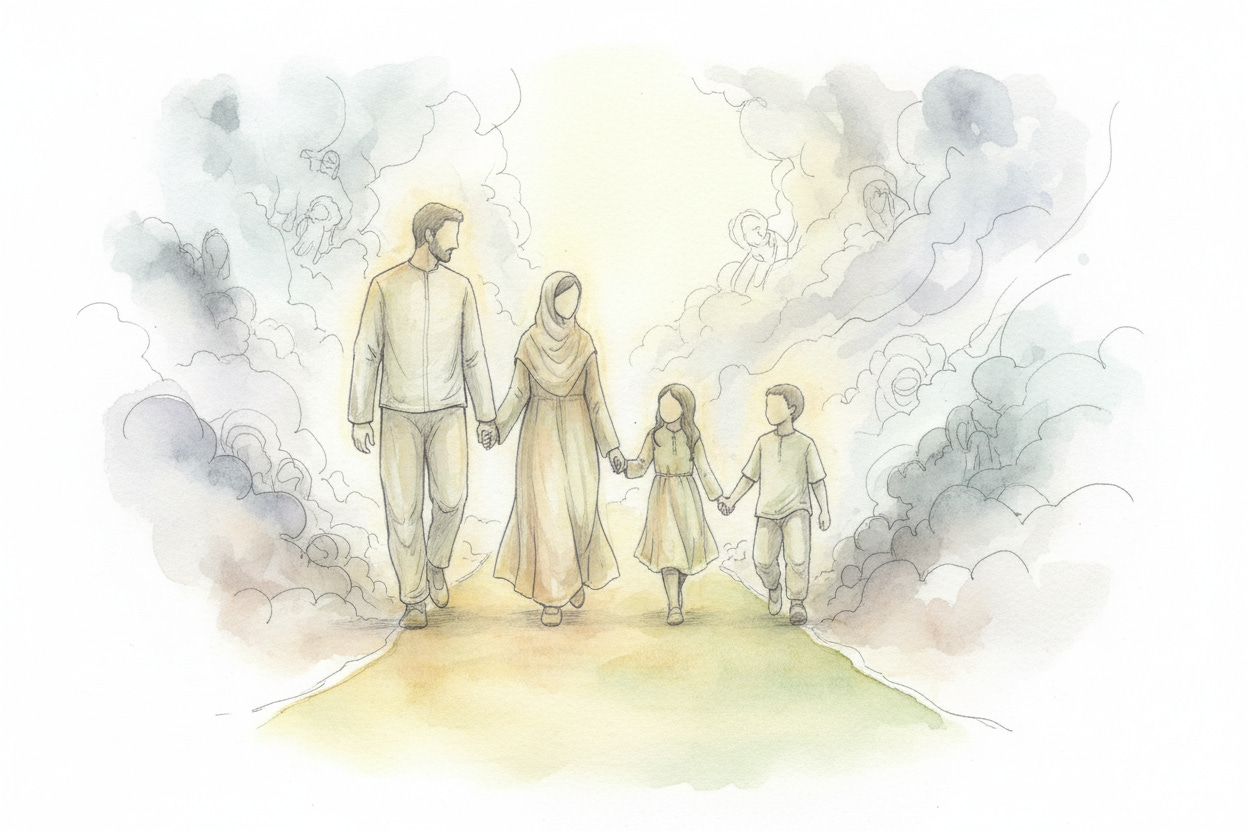
Religion was managed by a family (the Ahlulbayt), showing the value of the family unit. There is a special light given to a family that decides together to go to a mourning ceremony. How fortunate is the family that moves in unison toward Hussain. This bond extends to the Day of Judgment. On a day when families usually flee from one another—mother from child, husband from wife—those who were “homeless” for Hussain together in this world will be guided together to Paradise. We must set a specific intention: “I want a Wilayat-oriented family.” In such a family, love and affection naturally increase because they are centered around a higher love.
A Historical Reflection: The Bond of Father and Child
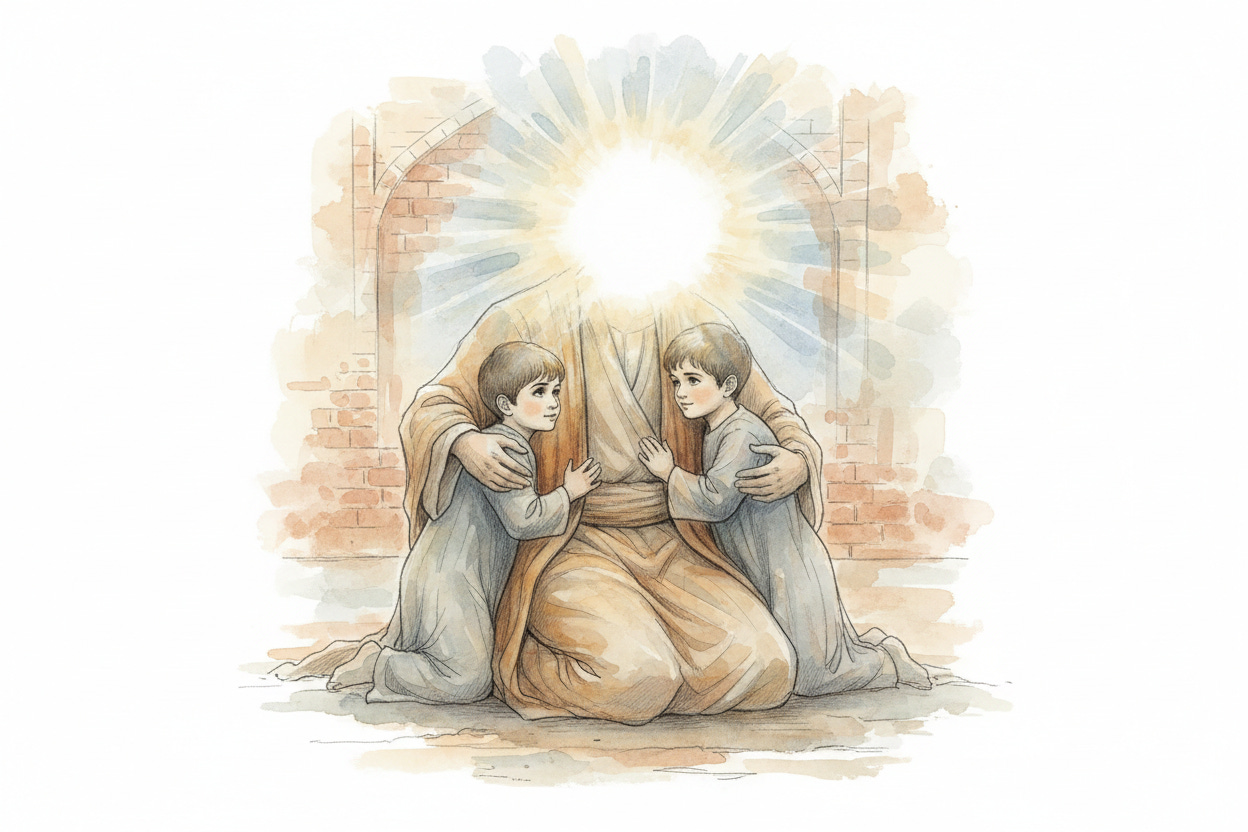
We recall the story of Muslim ibn Aqil. When he realised he was surrounded and alone in Kufa, he did not abandon his children to chance. He took his two young sons and entrusted them to Shuraih the Judge, asking him to protect them because they were innocent. He ensured they were cared for before facing his fate, saying goodbye while they were still safe. There is a heartbreaking contrast here. Muslim ibn Aqil had a moment to say goodbye and entrust his children to safety before his martyrdom. However, had to witness the attack on his tents and his family before his very eyes, leaning on his spear in his final moments. This highlights the ultimate sacrifice of family for the sake of God.
Original: Voice | The Guardianship Seedling in the Family Institution | panahian.ir