

The Family as the Training Ground for Guardianship (Wilayat)
Video:
Audio:
Original Audio from Sheikh Ali Reza Panahian’s Website
Raising Children with Higher Expectations
Many parents today have limited expectations for their children. They are satisfied if their child simply studies, finds a job, avoids addiction, and maintains a decent reputation among neighbors. However, there is a higher standard of parenting—one that seeks to raise children who are “Wilayat-Madar” (Devoted to the Guardianship).
These parents want the love and authority of Ali ibn Abi Talib (AS) to be the fundamental characteristic of their children’s hearts. They aspire for their offspring to be counted among the true companions of the Imam of the Time (the Mahdi). This goal requires parents to have a distinct, spiritual vision for their family life, one that goes beyond mere social success.
The Strategic Importance of the Family Unit
Those who wish to raise devoted followers of the Imam must understand that the family is the primary “training camp.” While mosques are excellent for prayer and schools for education, the specific training for Wilayat happens within the home.
The enemies of this path—specifically Zionism and oppressive tyrants (Taghut)—understand this better than anyone. They know that to delay the righteous rising, they must strike at the family structure. Conversely, a family that centers its life around these spiritual principles becomes a fortress against darkness. The Quran reminds us that while God leads believers from darkness to light, Taghut drags people from light into darkness.
“Cooking” the Soul: Knowledge vs. Upbringing

There is a difference between gathering ingredients and cooking a meal. Reading books and learning history are like gathering ingredients (chickpeas, lentils, water). Upbringing (Tarbiyat) is the process of “cooking.”
Where does a person truly mature into a follower of the Imam? It is not just at the foot of a pulpit or in front of a television; it is in the daily interactions of the home. The family is where the raw material of faith is cooked into the solid substance of character. If the concept of Guardianship is not practiced and perfected at home, it will not manifest effectively in society.
The Theology of “Gestures” (Ta’riz) vs. Explicitness

A profound theological concept distinguishes the Prophet of Islam (PBUH) as a “Mercy to the Worlds.” Unlike previous prophets who spoke with absolute explicitness (Tasrih)—where rejection meant immediate doom—the Prophet of Islam often used Ta’riz (implication or gestures).
By speaking in signals and hints regarding certain truths, he provided a mercy: those who understood and obeyed were rewarded, while those who didn’t quite “get it” were given a chance rather than immediate condemnation. This “religion of signals” is why the Quran emphasises obeying parents immediately after obeying God. It is a divine signal: the obedience to parents is the practice ground for obedience to the Infallible Imams.
Respect for Parents: The Gateway to Spiritual Obedience
The command “And be good to parents” is strategic. Disobedience to parents is described as a sin that “darkens the skies.” This is not just about social etiquette; it is about spiritual hierarchy. If a child cannot accept the guardianship of their father or respect their mother at home, they will never be able to truly submit to the Imam of the Time.
The home is the laboratory of obedience. A young person who respects the boundaries set by parents—even when the parents might be mistaken—is training their soul for higher submission. Conversely, breaking the sanctity of the parent-child relationship destroys the very root of Wilayat in the heart.
Honoring the Pioneers: The Legacy of Martyr Kafi
We must honour those who paved the way for this spiritual awakening, such as the honourable Martyr Kafi. He was a man whose voice caressed the soul and who brought the word of God to the hearts of the people. Many martyrs of the Sacred Defense were spiritually raised at the foot of his pulpit.
Martyr Kafi was so influential that the regime of the time (SAVAK) martyred him and forbade his funeral procession, fearing the revolution it would spark. We need to keep the names of such great figures alive on our streets and in our memories, so future generations ask, “Who was this man?” and rediscover his legacy.
The Ultimate Example: The Family of Karbala
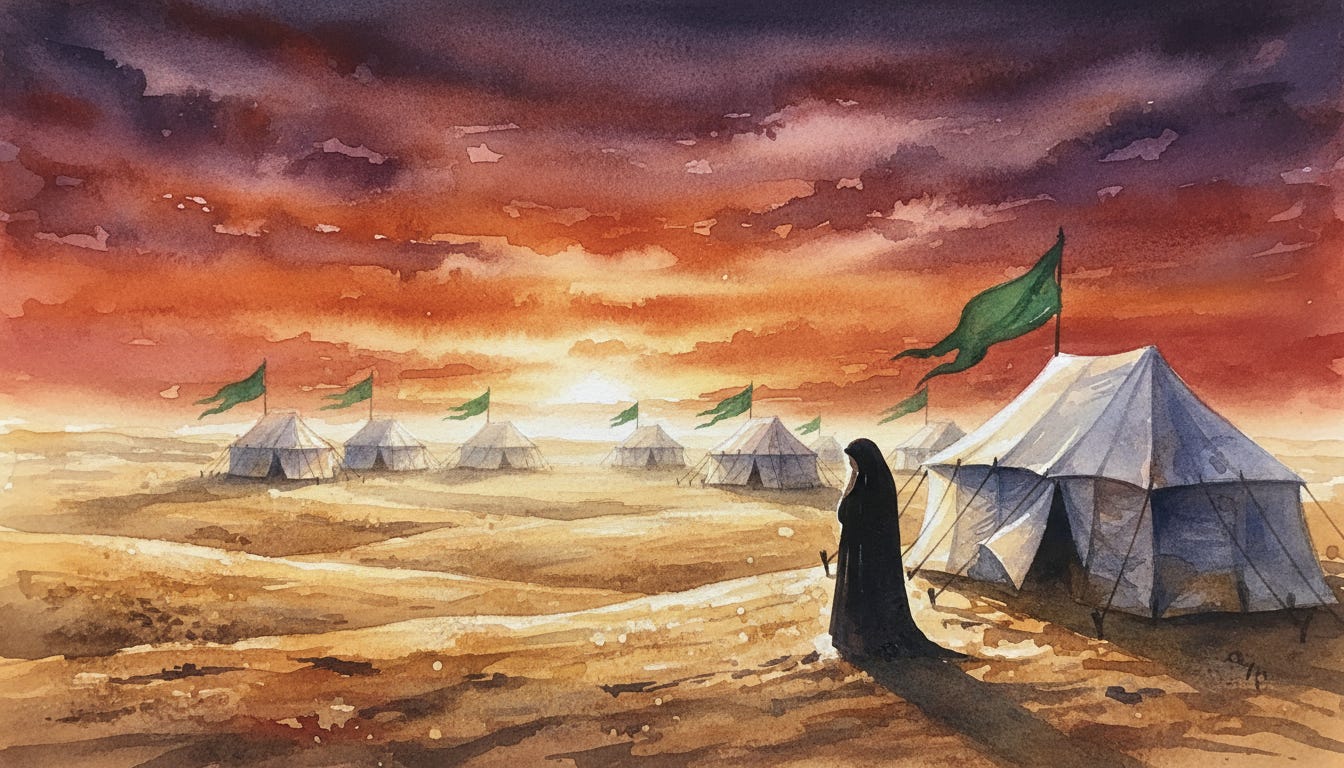
Finally, we look to Karbala as the ultimate model of family devotion. We see Hazrat Zainab (SA), who sacrificed her own sons for the Imam of her time, Hussein (AS). When her sons went to battle, she did not even step out of her tent, lest her brother feel shame or her sacrifice seem like a burden.
Karbala was a family event—brothers, sisters, uncles, and children all played a role. It teaches us that the path of truth is walked together. When we cry for the tragedies of Ashura, for the three-year-old in the ruins or the separation of siblings, we are crying for the sanctity of a family entirely dissolved in the love of God. This is the standard we aspire to: families that are ready to sacrifice everything for the Truth.
Original: Voice | The Guardianship Seedling in the Family Institution | panahian.ir